A Legacy Built on Craftsmanship, Quality, and Innovation
Jerusalem Plast is a family-owned manufacturing company with roots extending over six decades, combining traditional craftsmanship with modern industrial technology. Quality has remained the foundation of Jerusalem Plast’s manufacturing philosophy since 1962, guiding the company’s growth, innovation, and commitment to excellence across generations.
The journey of Jerusalem Plast reflects continuous evolution — from handmade metal souvenirs in Jerusalem to advanced plastic manufacturing serving homes, gardens, and industries across the region and beyond.

The Early Years — Jerusalem, 1962
The story of the Haddad family began in 1962 in Jerusalem, where the family operated as manufacturers of traditional souvenirs. Their workshop specialized in brass products, including authentic Arabic coffee cups and coffee pots, distributed to souvenir shops throughout the Old City of Jerusalem.
These early years established the values that still define Jerusalem Plast today: craftsmanship, precision, reliability, and pride in manufacturing.

Entering the Plastics Industry — 1972
In 1972, the family took a major step toward industrial manufacturing by establishing a plastic injection molding factory in Ramallah, Palestine, operating two injection molding machines producing plastic jewelry boxes and specialty packaging products.
This marked the transition from traditional craftsmanship into modern plastic manufacturing.
Engineering Foundations — 1975
In 1975, operations expanded to Amman, Jordan, with the founding of Haddad Industrial, specializing in:
-
Plastic mold manufacturing
-
Industrial maintenance
-
Technical engineering services
This phase developed deep expertise in tooling and mold engineering, forming the technical foundation that continues to support Jerusalem Plast’s manufacturing capabilities today.


The Birth of Jerusalem Plast — 1981
In 1981, Jerusalem Plast was officially established as a dedicated plastic manufacturing company. Starting with several injection molding machines, the company initially produced clothes hangers and small household plastic products for local markets.
Expansion and Diversification (1987–2001)
Over the following decades, Jerusalem Plast expanded its technologies and product range:
-
1987 — Introduction of blow molding production
-
1991 — Launch of plastic bag manufacturing
-
1995 — Entry into plastic furniture production
-
1995 — Installation of extrusion lines for plastic recycling
-
2001 — Production of plastic planters and agricultural pots
These developments transformed Jerusalem Plast into a diversified plastics manufacturer serving multiple sectors.

Strategic Focus — Injection Molding Excellence
In 2004, Jerusalem Plast made a strategic decision to discontinue blow molding and plastic bag production in order to concentrate entirely on injection molding technology, allowing greater specialization, improved quality standards, and long-term product durability.

Supporting Agriculture & Sustainable Growth — 2015
In 2015, Jerusalem Plast introduced a specialized line of agricultural grower pots manufactured from recycled car bumpers, transforming post-consumer automotive plastic waste into durable products used for tree and plant cultivation.
These growers support agricultural expansion and sustainable farming practices across Jordan and the region.
Advanced Thin-Walled Technology — 2017
In 2017, Jerusalem Plast introduced thin-walled plastic growers, produced using high-technology injection molding machines designed for thin-wall manufacturing.
This innovation enabled pots that are rigid yet lightweight, achieving high productivity, improved material efficiency, easier handling, and optimized transportation performance.
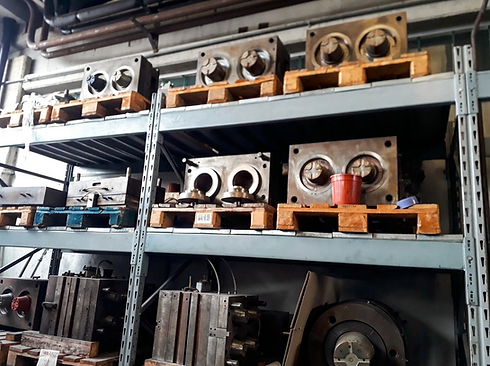

Technology & Innovation — 2019
Jerusalem Plast continued its technological advancement with the introduction of double-color injection molding machines, enabling innovative multi-color plastic products and enhanced design flexibility.
Circular Manufacturing Innovation — 2022
In 2022, Jerusalem Plast introduced a new generation of thick-walled plant pots manufactured from mixed recycled materials, allowing production waste and recycled plastics to be reintegrated into durable long-life products.
These pots are engineered to last for years without breakage or fading and feature a natural stone-look texture and finish, combining sustainability with premium aesthetics while supporting circular manufacturing and waste reduction.

Sustainability & Environmental Responsibility
Sustainability is a core commitment at Jerusalem Plast and a guiding principle in its manufacturing philosophy. The company is dedicated to reducing environmental impact by transforming plastic waste into durable, long-lasting products.
Today, approximately 99% of Jerusalem Plast products are manufactured using recycled materials, significantly reducing reliance on virgin plastics.
Jerusalem Plast specializes in processing hard recycled plastics often unused by the industry — including recycled car bumpers and mixed plastic waste that would otherwise be discarded in landfills. Through engineering innovation, these materials are transformed into high-quality usable products such as heavy-duty plant pots and agricultural solutions.
Materials once considered waste are given a new lifecycle through manufacturing innovation, reflecting Jerusalem Plast’s commitment to environmental responsibility and sustainable industrial growth.

Sustainability, Automation & Modern Manufacturing
Today, Jerusalem Plast operates more than 13 injection molding machines, supported by increasing levels of automation to ensure efficiency, precision, and consistent product quality.
The company operates a fully equipped in-house maintenance workshop, allowing machinery servicing and mold maintenance to be carried out internally without outsourcing work outside the factory.
A specialized team of mechanical and electrical engineers, supported by skilled technical staff, ensures fast diagnosis, immediate solutions, and efficient machine servicing, minimizing downtime and maintaining continuous production efficiency.
Regional & International Presence
Jerusalem Plast exports its products to multiple regional and international markets, including:
-
Kuwait
-
Kingdom of Saudi Arabia
-
Oman
-
Qatar
-
Palestine
-
Lebanon
-
Puerto Rico
And additional international markets
This expansion has been made possible through long-term partnerships and the continued trust and confidence of customers who rely on Jerusalem Plast for consistent quality and dependable supply.


A New Generation — 2026
Sling® Furniture Collection
A modern furniture collection manufactured using polypropylene (PP) reinforced with fiberglass, combining lightweight design with superior strength and outdoor durability.
The Jerusalem Plast Showroom,
Online Store & Home Delivery — 2026
A dedicated showroom allowing customers to explore and experience the complete product range in one location.
Jerusalem Plast launched its online store, allowing customers to browse products, select items easily, and order directly through the website with door-to-door delivery, providing a convenient and modern shopping experience.

Jerusalem Plast Today
Today, Jerusalem Plast designs and manufactures:
Indoor and outdoor furniture
Planters and agricultural pots
Household plastic products
Custom injection-molded solutions
With decades of accumulated expertise, advanced manufacturing technology, and continuous innovation, Jerusalem Plast places strong emphasis on product quality, durability, and consistency at every stage of production — from material selection and mold engineering to final manufacturing and finishing.
Strict quality standards and continuous process improvement ensure reliable, long-lasting products that meet customer expectations.
Jerusalem Plast remains committed to manufacturing reliable, high-quality, functional, and sustainable plastic products that improve everyday living.
From a small Jerusalem workshop in 1962 to a modern automated manufacturing operation today, Jerusalem Plast stands as a story of heritage, innovation, sustainability, quality, and customer trust.